Preventing Bato Bucket Drain Clogs in Hydroponic Greenhouse Vegetable Production
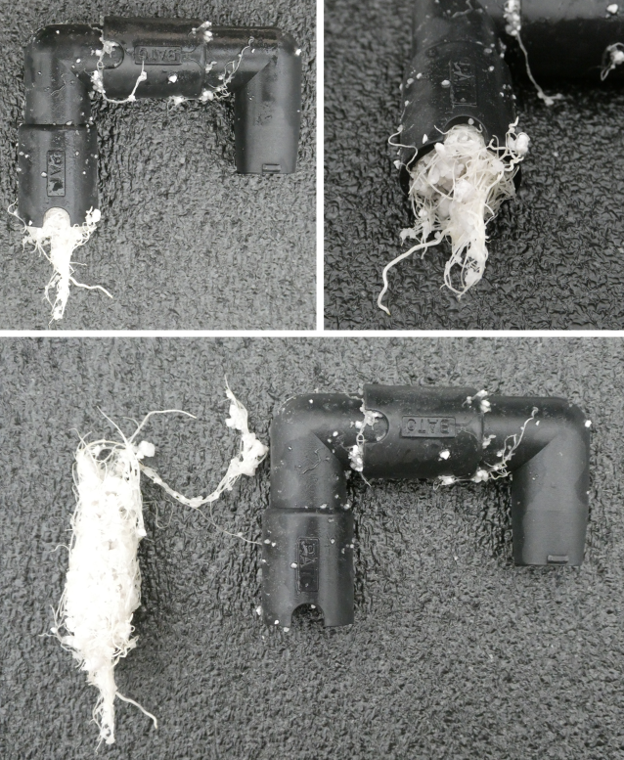
Root growth into Bato bucket drains is a common and costly maintenance issue in greenhouse hydroponic vegetable production because it can alter the root-zone environment well before canopy symptoms appear. When roots colonize the drain elbow or outlet, drainage slows and substrates stay saturated for longer periods, reducing oxygen and increasing variability in vegetative growth, nutrient uptake, and fruit set. In severe cases, the bucket can function like a poorly aerated reservoir, increasing the risk of root rot diseases and creating uneven performance across a crop and greenhouse.
Most clogs start at the drain opening; therefore, the most effective prevention is a simple physical barrier that keeps roots from entering the drainage outlet. Many growers use a nylon mesh sock or small paint strainer bag secured with a zip tie over the outlet or elbow, while others install a rigid slotted screen or small mesh basket at the drain port. The goal is to block root intrusion while maintaining free flow of nutrient solution and allowing small substrate fines to pass. Avoid barriers that are too fine, since they can trap fines and quickly develop biofilm, which restricts drainage.
Irrigation management also influences how aggressively roots explore and occupy drain areas. Excessive irrigation and limited dry-down keep the lower profile persistently wet and can encourage roots to concentrate where water movement is greatest, often near the outlet. Maintaining crop-appropriate dry-down between irrigation events helps stabilize oxygen availability throughout the substrate and reduces the likelihood that roots target the drain elbow. Managing algae and biofilm is similarly important because these surfaces trap fines and create a matrix that roots readily colonize, accelerating the shift from a minor restriction to a persistent plug.
Finally, the most consistent programs treat drainage as a routine performance check rather than a reaction to wilt or uneven vigor. A quick weekly walk to observe drainage during or immediately after irrigation can identify slow-draining Bato buckets early, when the fix is still simple. Periodic spot-checks of elbows and scheduled flushing of drain lines, especially in high-frequency irrigation zones, further reduce risk. In most operations, combining a basic drain barrier with best irrigation practices and a consistent inspection routine prevents most root-related drain clogs and helps maintain uniform root health and crop performance.
W. Garrett Owen
Assistant Professor of Sustainable Greenhouse and Nursery Systems, The Ohio State UniversityW. Garrett Owen is an Assistant Professor of Sustainable Greenhouse and Nursery Systems in the Department of Horticulture and Crop Science at The Ohio State University. He has an appointment in research, teaching and Extension. His area of expertise is plant nutrition; plant growth regulation; and production problem diagnostics.